Understanding Hong Kong Dollar Peg System
Hong Kong dollar has a mechanism designed to keep the HKD stable against USD through Linked Exchange Rate System (LERS). Since 2005, the Hong Kong Monetary Authority (HKMA) has maintained a guaranteed trading band of HKD 7.75 (upper limit) to HKD 7.85 (lower limit) per 1 USD. Anchor rate is around HKD 7.80 per USD 1, which the band is centered around. The HKMA guarantees to buy or sell USD within this trading band to keep the currency rate stable.
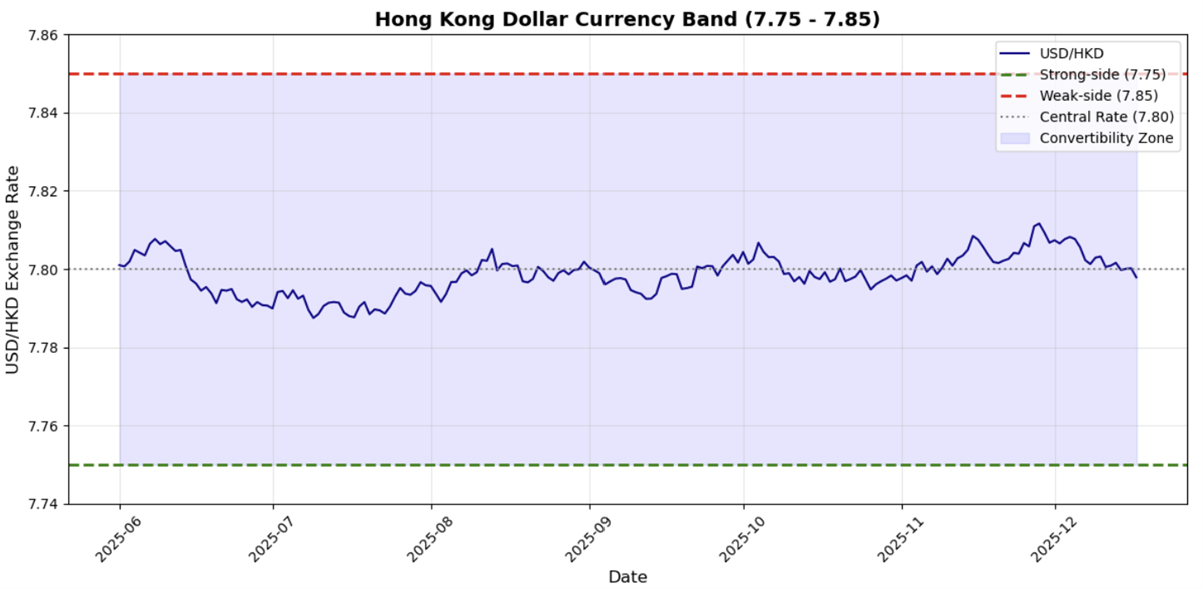
How Does It Work?
When the HKD hits either end of the band, the HKMA will intervene automatically through interest rate adjustment to stabilize the currency.
When the HKD is strong (when it hits HKD 7.75 per USD)
It means demand for HKD is greater than the supply, pushing its value up. In this case, HKMA will sell HKD to banks for USD and buy USD. This will increase the amount of HKD in the banking system (the aggregate demand) pushing the local interest rate down, making HKD less attractive and easing the upward pressure on the currency.
When the HKD is weak (When it hits HKD 7.85 per USD)
he supply of HKD is greater than the demand. Then the HKMA will buy HKD from banks and sell USD. This will remove HKD from the system. With less HKD available, local interest rate will rise, making HKD more attractive to hold keeping its currency value from the decline.
The HKMA is legally committed to this currency band and backs HKD in circulation with USD reserves. This system acts as an anchor of confidence during the global financial crisis.
Through this system, Hong Kong has a fixed exchange rate and free capital movement but an independent monetary policy is forgone. Its interest rate follows those set by the US Federal Reserve, not based on its own local economic needs. For the HKD peg to remain intact, strong USD reserves and institutional credibility are required.